The Great Wealth Transfer in APAC; What Families Can Do to Promote a Smooth Succession.
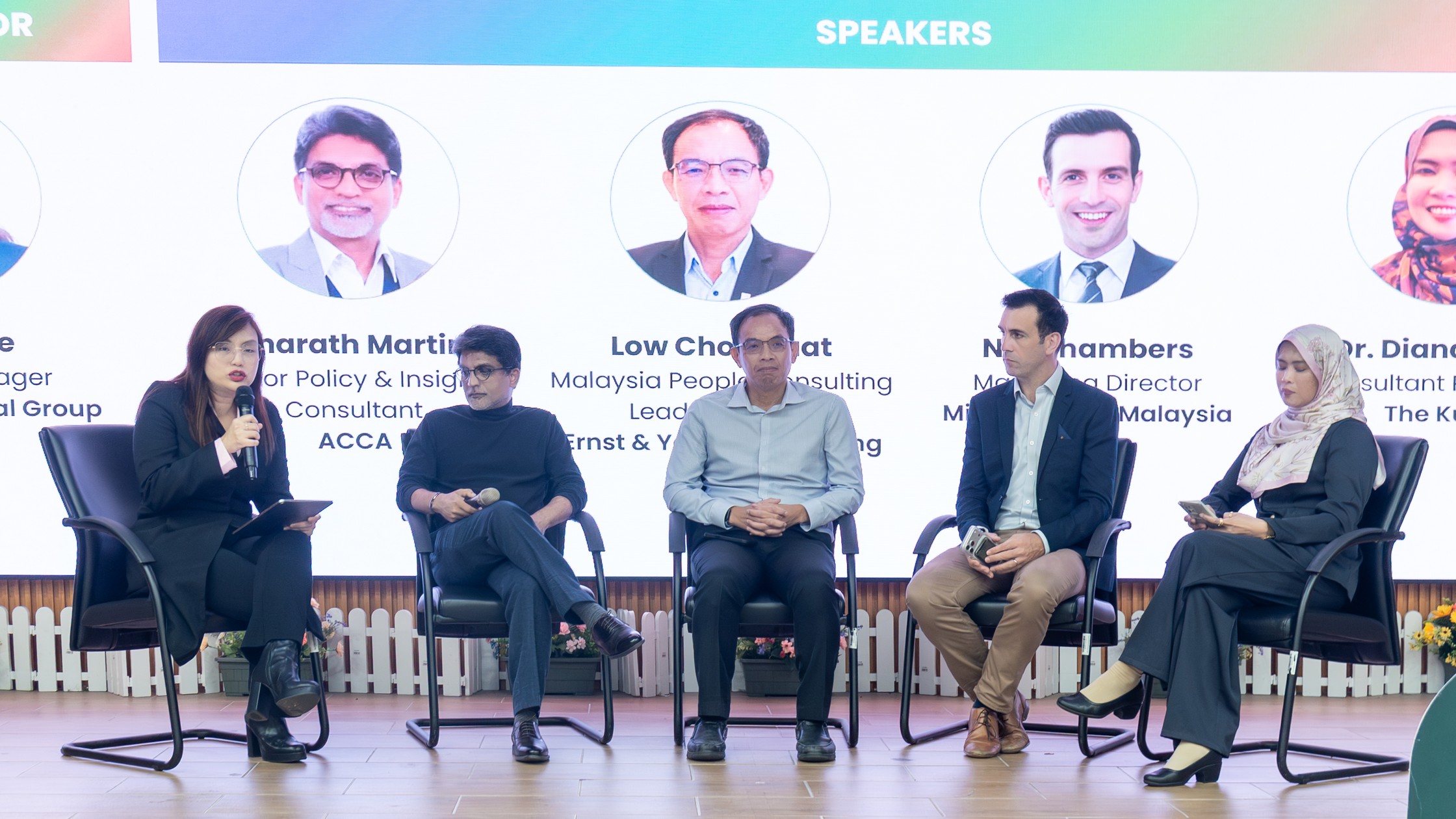
When considering the Great Wealth Transfer in APAC, the numbers alone are significant. At the Malaysia Wealth Management Forum 2026, Maybank's Head of Private Wealth put the amount moving from first to second generation across the region at roughly USD1.3 trillion.
However, much of this regional wealth is first-generation, built in the last 30 to 40 years by a single founder. It is also often tied up in a family business rather than liquid assets, meanwhile cultural norms around hierarchy and family harmony mean succession is not usually discussed openly. These factors taken together could then leave many heirs inheriting responsibility they were never prepared for, putting hard-earned wealth in jeopardy.
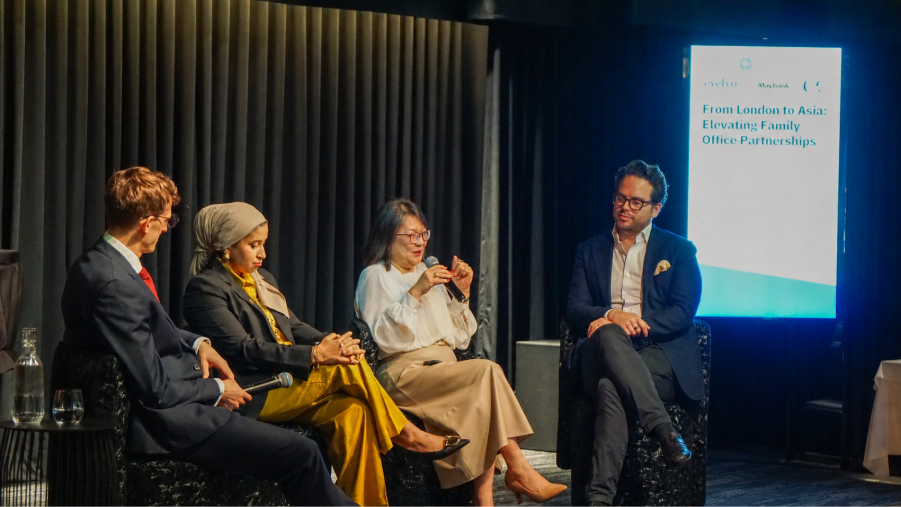
Nicole Wee, Partner at Chooi & Company Advocates & Solicitors, at our Family Office panel, talked precisely to this point. She noted a case where a founder's succession plan divided the business equally among eight children. However, only one child worked in the business. The expectation that the other seven would eventually take part had never been articulated directly. Just in this one example but it helps to show how complications and conflict can quickly arise if plans aren’t shared.
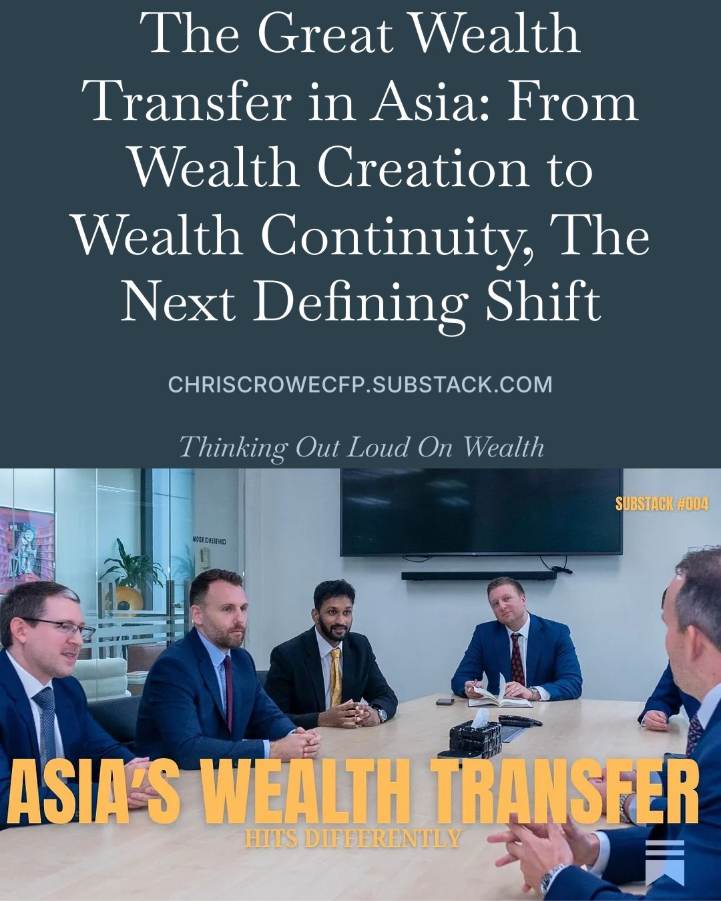
I explore the Great Wealth Transfer in APAC in more detail as part of my ongoing Substack series, which you can read here. For families and founders considering how best to achieve a smooth succession, here are some practical considerations.
Have a plan
Some think that if they have a will, they have an estate plan; but that’s not true. A will sets out how your assets are distributed when you die, but on its own it says nothing about who runs the business, who makes decisions if you become incapacitated, or how tax and liquidity will be handled.
A broader estate plan can bring in trusts, powers of attorney, healthcare directives, tax planning and business succession arrangements such as shareholder agreements. Together, these help ensure your wishes are carried out, your family is protected and your wealth passes on as efficiently as possible. The tools available, and how they are recognised, vary by jurisdiction, which matters for families with assets in more than one country.
Our estate planning checklist for expats and high-net-worth individuals is a useful place to start when creating your estate plan.
Map the estate across borders
It’s more common today for assets to span borders. While cross-border assets can present opportunities they also come with inherent complexities, especially in consideration of succession planning. This is a topic I’ve covered in some detail in a previous article, so if you do have assets in several countries, this is worth a read.
When creating your estate plan, it’s vital to understand where every asset sits and, importantly, which laws govern it. A family with property in London, shares held through a US broker and a business in Kuala Lumpur is dealing with several legal and tax systems at once, each with its own rules on how assets pass on death.
A practical starting point is a full inventory. From there, families can consider wills that work across jurisdictions, whether to restructure how wealth is held, and how to provide liquidity. Where wealth is asset-rich but cash-poor, life insurance is worth considering as it can provide vital funds at the point of transfer without forcing a sale of the business or property.
Have the conversation
According to a recent survey of APAC HNWI conducted by Lombard Odier reported that even though effective communication is widely seen as critical to alignment and succession planning, more than one in four (26.0%) highlighted the sensitivity of such discussions. Despite how difficult it may be, having the conversation is crucial if everyone is to understand the plan and their role within it.
Talk about expectations, not just assets
Many families talk about what will be passed on, but not about what is expected of the people receiving it. Who wants a role in the business, and who doesn't? Who is expected to lead? And what does "fair" mean to this particular family?
Dividing an estate equally may feel fair, but if the estate comprises of a business, it can overlook who’s best placed to support that business in the future. In fact, "fair doesn't mean equal" was one of the five questions every succession plan must answer set out by a panel discussion we hosted at the Malaysia Wealth Management Forum.
Whatever your plans for your estate, it’s best to start these conversations early. They should also recur as circumstances change. During the conversations, it’s also good to not just talk about money but cover values and legacy as well.
Develop successors, don't just name them
Naming a successor in a will or plan is not the same as preparing them. UOB found that 72% of founders still see their children as likely successors, yet 28% cite a lack of interest from the next generation as a challenge. At a family office discussion we hosted, our panellists also noted, successors are often named but rarely developed, and heirs can arrive at the moment of transfer unsure what they own, how it is structured, or what role they are expected to play.
Preparation can be gradual. Observer seats at board meetings, internships, mentoring from senior managers and structured financial education all give the next generation real exposure before they need it. Experience outside the family business can be just as valuable, bringing back skills and credibility.
Good Governance Practices
Governance defines who decides what, and how. A family constitution, a family council and regular family meetings give those decisions a clear process, which matters more as families grow across generations, marriages and countries.
The panellists at the Malaysia Wealth Management Forum described governance across three overlapping areas: business, ownership and family. They also stressed that a document is only as effective as the habits around it. A constitution that sits in a drawer will not resolve a dispute. Agreed exit routes for family members who want to step away, and mechanisms such as advisory boards, can prevent disagreements from becoming deadlocks.
The structure should fit the family, not the other way round. For more complex families, a family office structure can bring governance, investment and succession together under one roof. Our recap of bringing global family office best practice to Malaysia explores how other families have approached this.
Coordinate advisers
Legal, tax and investment advice working in silos leaves gaps. Succession touches all three, and when each adviser sees only part of the picture, the result can be inefficiency, value leakage or a plan that contradicts itself. Dato Shivajini Seelan of JS Partners made this point at our Family Office panel: no single structure can prevent problems that arise between disciplines.
For families with assets and relatives in several countries, coordination across borders matters just as much. The panel at the Malaysia Wealth Management Forum was unanimous that international collaboration between advisers is now a requirement.
Preserving Wealth for Generations to Come
With proper planning, wealth built in a single lifetime can be secured for future generations. But a successful succession is about more than transferring assets: it requires families to align around their values, prepare the next generation for responsibility, establish clear governance and ensure legal, tax and investment arrangements work together across borders. The key is to start early, while there is time to have open conversations, test the plan and adapt it as the family, business and regulatory landscape change. By treating succession as an ongoing process rather than a one-off event, founders can give their heirs the clarity and confidence to protect what has been built while shaping a legacy of their own.
If you are thinking about how your own family's wealth will pass on, speak to one of our Private Wealth Managers.
This article is for general information only and does not constitute financial advice and should not be construed as such. Outcomes depend on individual circumstances, and independent, professional advice should be sought before making any financial decision.

Explore our Insights
Our team of global experts share their perspective on markets and news from the company.